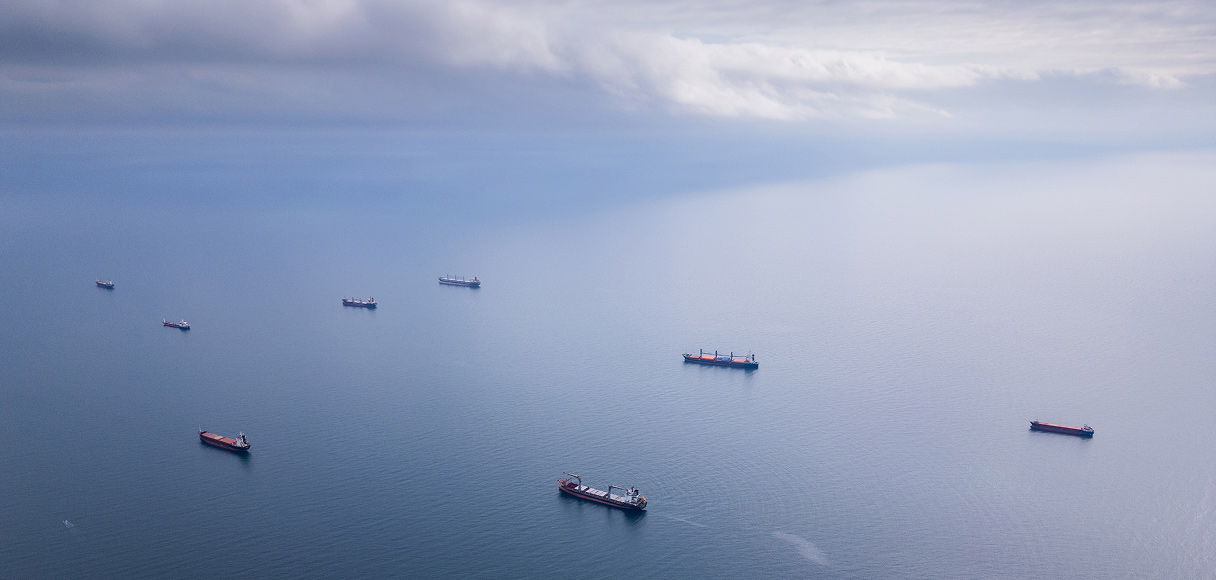
The second quarter of 2026 marked a turning point for global commodity markets. The near-closure of the Strait of Hormuz exposed vulnerabilities across energy, metals, agriculture and supply chains that most investors had never modeled – revealing that modern commodity systems are constrained not by the availability of resources, but by logistics, infrastructure and operational flexibility. The Q2 2026 Quarterly Report provides a 360° analysis across all major commodity segments.

Commodities Quarterly Report Q2 2026
Read the reportThe full "Chokepoint" report covers 30 pages of analysis across energy, industrial metals, precious metals and agriculture – with charts, performance data and our key drivers and outlook for the second half of 2026.
Spotlights

Energy Security Replaces Decarbonisation at the Top of the Agenda
The near-closure of the Strait of Hormuz triggered the largest effective oil supply disruption since 1973 – but the real constraint was not crude itself. Refined products, LNG infrastructure and shipping logistics proved to be the binding bottlenecks. At the same time, electricity demand is growing faster than overall economic output for the first time in decades, driven by AI data centres and accelerating electrification.

Copper and Aluminium: From Cyclical Commodities to Strategic Infrastructure
The Hormuz crisis exposed a hidden dependency: roughly 50% of globally traded sulfur – a critical input for copper processing – normally transits the strait. Sulfuric acid prices doubled within seven weeks. Aluminium lost nearly 4% of global primary supply as Middle Eastern smelters sustained damage requiring months to repair. Major copper discoveries have collapsed since 2012, pointing to structural scarcity rather than cyclical tightness.

Reserve Assets and a Fertilizer Shock Before a Food Shock
Gold demonstrated notable resilience despite Hormuz-driven deleveraging — a signal of structural demand strength, backed by China's 18th consecutive monthly gold purchase. In agriculture, the crisis became a fertilizer shock first: China, Russia and the Persian Gulf control over 60% of major fertilizer trade, disrupting supplies at the start of the Northern Hemisphere planting season. Unlike oil, agricultural supply shocks take growing seasons to correct.
The Three Signals
- The system, not the resource, is the constraint
The Hormuz crisis demonstrated that commodity markets are increasingly bound by logistics, refining capacity, inventories and supply-chain resilience – not by the absolute availability of oil, metals or fertilizers. - Electrification and AI are repricing industrial metals structurally
Copper, aluminium, uranium and silver are no longer purely cyclical. Electricity demand growing faster than GDP, combined with collapsed discovery pipelines and years of underinvestment, points to a structurally tighter market environment through the decade. - Commodity equities remain cheap despite record earnings
Materials leads S&P 500 EPS growth at over 100%; Energy follows at approximately 60%. Yet energy represents less than 4% of the S&P 500 – well below its 20-year average. The gap between earnings power and valuation is historically wide.